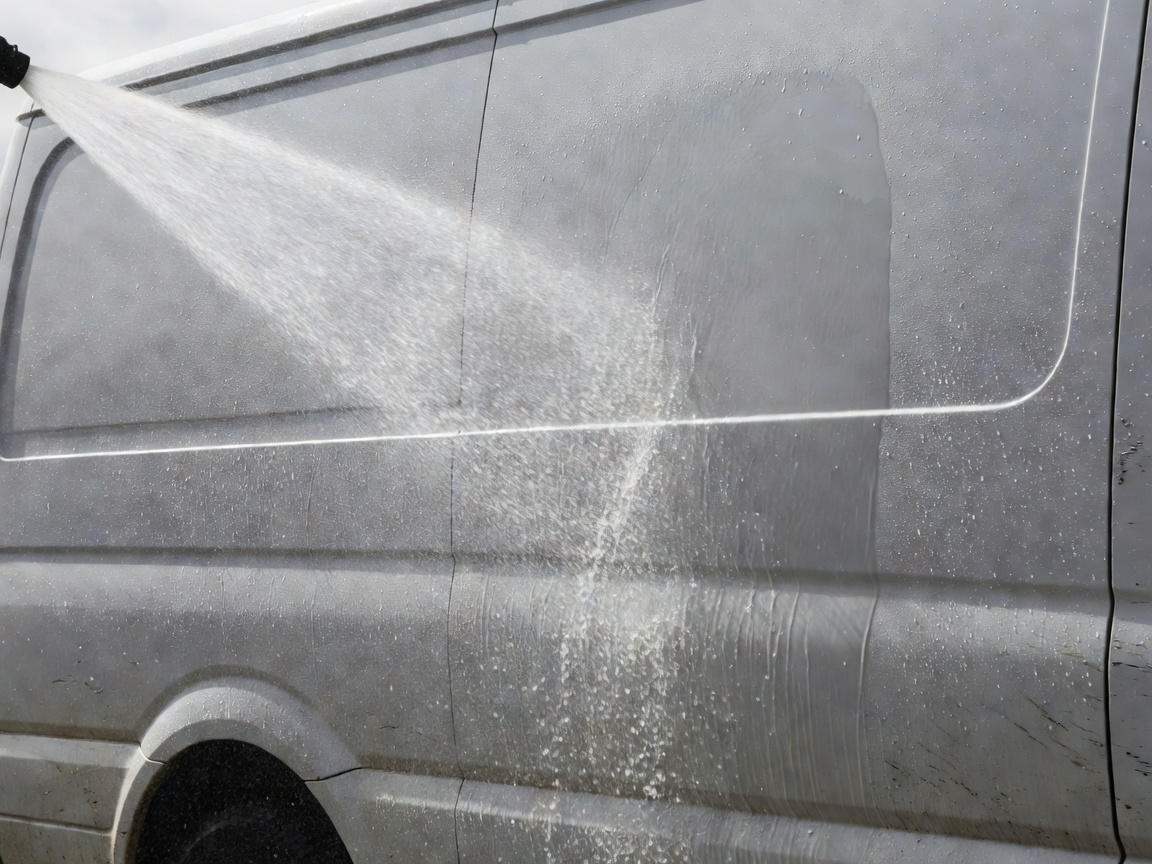
The Realities of Highway Contamination
When a commercial vehicle traverses European motorways such as the A1 in Germany, the Autoroute du Soleil in France, or the Brenner pass through Austria, its forward-facing and lower horizontal panels absorb a punishing barrage of abrasive particulates. This includes unburned hydrocarbons from heavy diesel exhausts, micro-fine metal dust shed from heavy-vehicle brake linings, and concentrated chloride-based road de-icers during autumn and winter months.
Allowing these contaminants to linger does not merely cause an unkempt aesthetic. Over multiple weeks, road film creates an acidic chemical mantle that bonds chemically to the polyurethane automotive finish. The moment moisture or morning dew forms over the surface, an electrochemical oxidation process begins, degrading both the protective clear lacquer and underlying vinyl wrapping materials.
Systematic Two-Phase Chemical Cleaning Workflow
Modern fleet maintenance avoids harsh mechanical friction at all costs. Traditional high-pressure roller brushes or nylon brooms grind grit particles directly into the clear coat, generating deep micro-marring, swirl marks, and hazy oxidation. We advocate for a scientific two-phase chemical approach:
- Alkaline Pre-Wash Emulsification: A foaming alkaline pre-treatment (pH 10.5–11.5) is applied from the bottom sill upwards. This breaks down oily traffic films, bug splatters, and organic grease without requiring mechanical agitation.
- Targeted Neutralization & Acidic Balance: In regions with heavy limestone scaling or hard mineral water, a secondary mild acidic rinse (pH 5.0–5.5) neutralizes the alkaline residue, preventing chalky mineral deposits on glass and aluminum side rub rails.
- Contact Wash With Low-Drag Microfibers: For stubborn static film, trained detailers use high-lubricity shampoos combined with ultra-dense 800 GSM microfiber pads, strictly moving in parallel horizontal lines rather than circular strokes.
- De-Ionized Osmosis Final Rinse: Utilizing water with dissolved solids below 10 PPM guarantees a spotless drying process, eliminating hand-towel drying bottlenecks across large fleet rosters.
Chassis, Wheel, and Underbody Conservation
The most severe structural threats rarely occur on the visible side panels; they develop beneath the bodyline. Wheel wells, brake calipers, air reservoir tanks, suspension airbags, and fifth-wheel linkages collect dense cakes of road grime mixed with road brine.
Our exterior detailing protocol mandates 360-degree undercarriage lance sweeps using specialized rotating 0-degree turbo nozzles operating at 180 to 200 bar. This dislodges abrasive grit before it can compromise rubber suspension bushings, ABS wheel speed sensors, and pneumatic line couplings.
Method Comparison: Commercial Exterior Wash Approaches
| Approach | Downtime Per Van | Paint Longevity | Water Efficiency | Best Suited Fleet |
|---|---|---|---|---|
| Automated Commercial Gantry (Nylon Brush) | 6–8 Minutes | Low (Causes severe swirl marring) | High Water Reclaim | Heavy construction tippers, dumpers |
| Semi-Automated Textile Soft-Touch | 10–14 Minutes | Moderate (Requires frequent cloth washing) | Moderate Reclaim | Regional utility & postal vans |
| Precision Touchless Chemical + Manual Detail | 20–30 Minutes | Exceptional (No abrasive swirl marks) | Controlled Batch Reclaim | High-visibility liveried vans, pharmaceutical & food transports |
Livery and Graphic Film Preservation
European fleet operators invest substantial capital into vinyl wraps, digital graphics, and high-intensity retro-reflective safety tape conforming to ECE 104 standards. Harsh industrial solvent cleaners or excessive high-pressure nozzle proximity (closer than 30 cm at angles less than 45 degrees) will cause edge-peeling, adhesive failure, and matte discoloration.
By using calibrated nozzle distances, temperature-controlled water washes (under 55°C on vinyl surfaces), and specialized edge-sealing conditioning sprays, commercial liveries retain rich saturation and reflective integrity throughout the 3- to 5-year lease duration.
Essential Fleet Exterior Maintenance Checklist
- Inspect front valance and radiator grille for insect build-up preventing intercooler airflow.
- Verify that reversing cameras, blind-spot sensors, and ultrasonic proximity sensors are free from salt haze.
- De-grease rear cargo door hinges, sliding door roller tracks, and rubber weatherstripping.
- Flush alloy wheels using dedicated non-acidic iron-reactive decontaminants to eliminate hot brake dust pitting.
- Apply protective UV barrier to composite front headlight lenses to prevent yellowing polycarbonate degradation.